
WorkBuddy has recently added a monetization entry: Skills you build can now be listed and sold with a price.
Some skills in the marketplace, such as a business operations cockpit, already carry a paid label. People are already selling them.
But being able to sell is a long way from making 100,000 yuan a month. Beyond pricing, the harder question is why someone would pay for your Skill.
This article explains the payment setup, review process, and what to prepare before listing a Skill.
During the beta period, fees, review rules, withdrawals, taxes, and contract terms may change. Always follow the information shown in your own account.
1. Understand the review and payment order first
You need an approved product before you can enable payments
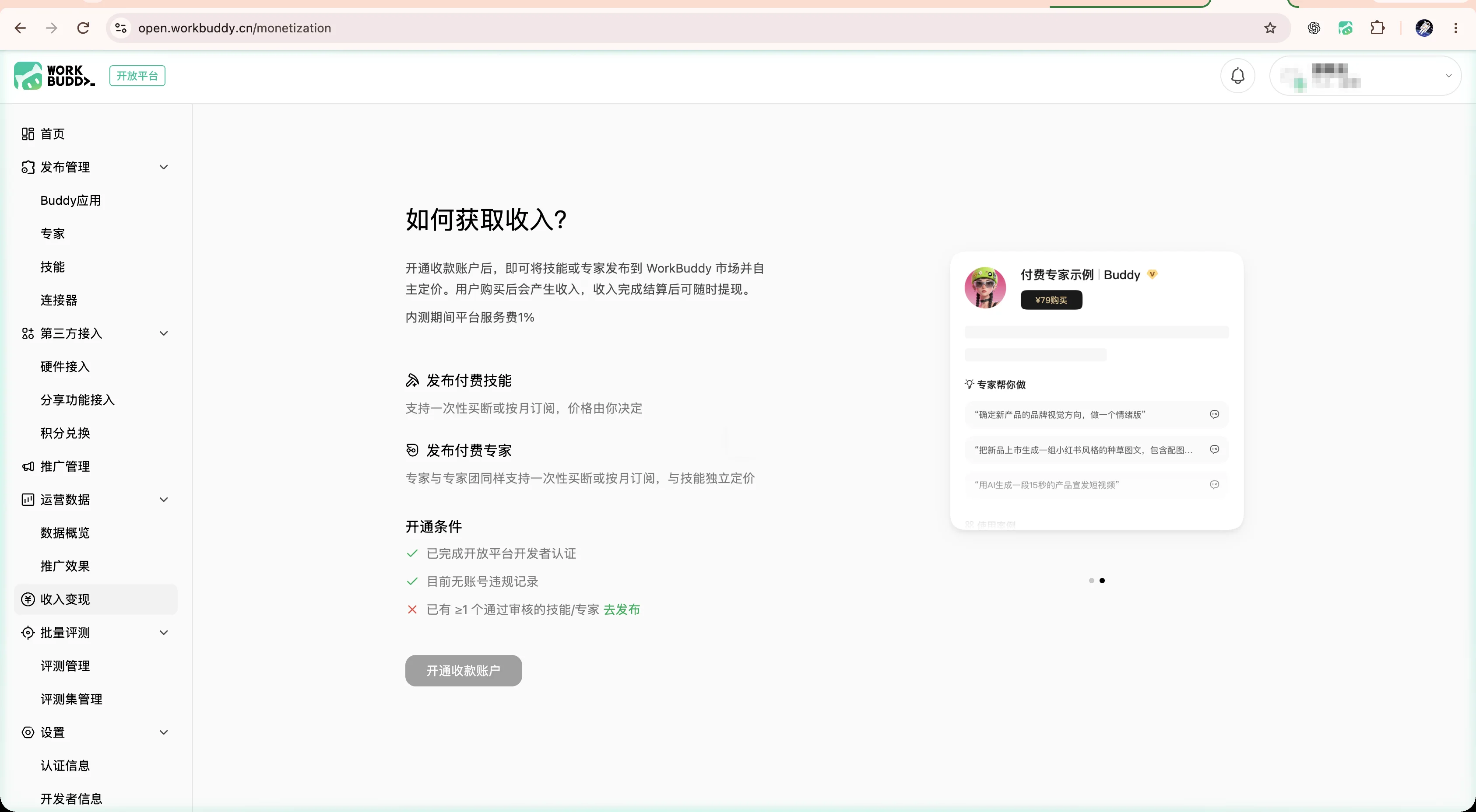
The entry is called “Monetization” in the left navigation of the WorkBuddy Open Platform. The current page says that a payment account requires:
- Developer verification.
- No violation record.
- At least one approved Skill or Expert.
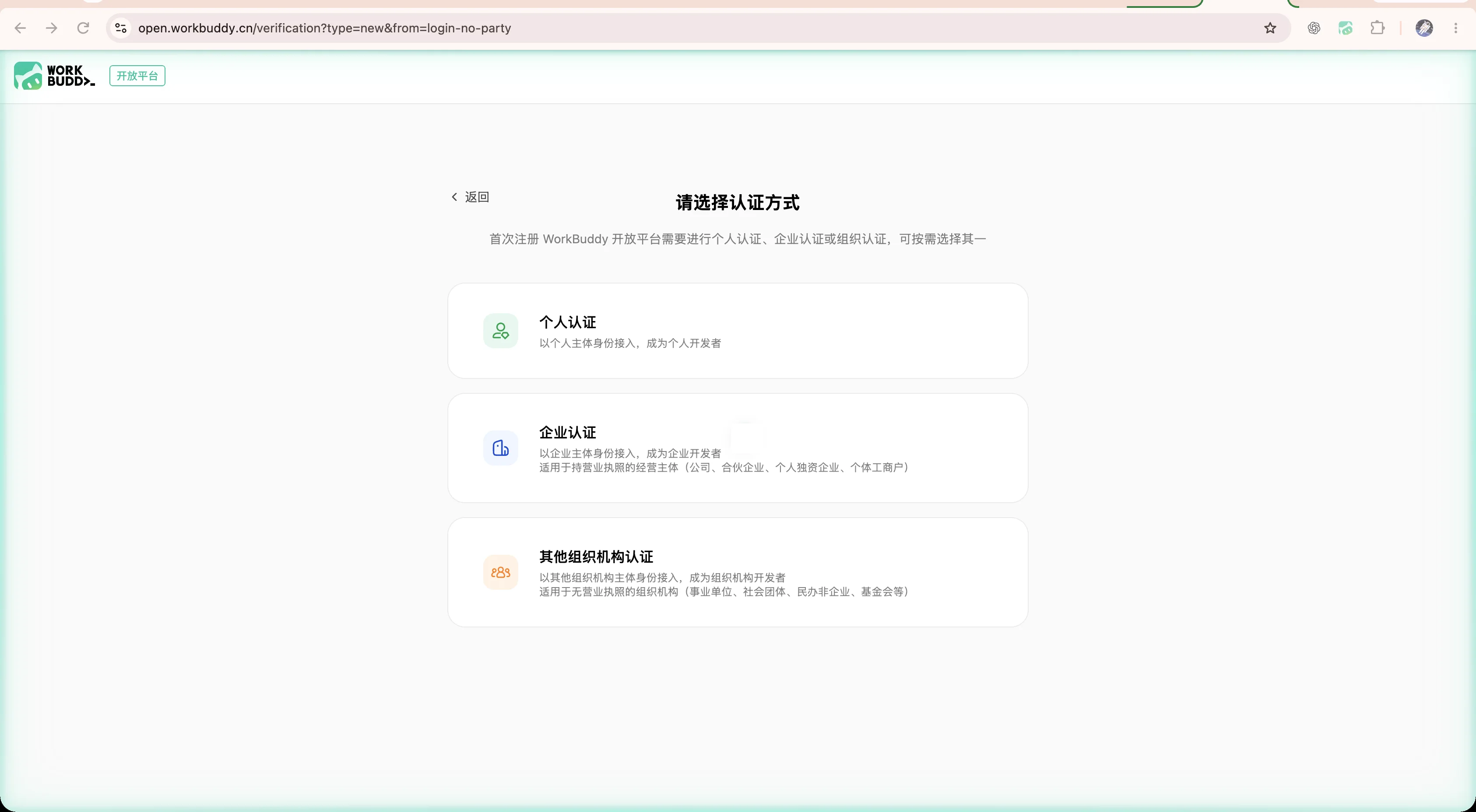
During verification, you choose an individual, company, or other organization. In my individual-verification attempt, the page did not request a business license; other entities may require different documents. Your verification entity affects how payments are collected, but payment access still depends on approval conditions.
A Skill is a workflow tool that performs a designed sequence of steps. An Expert is closer to a consultant that gives advice using a defined method. The platform currently supports paid use of both.
My submission showed a free price
When I first submitted a Skill, the review confirmation page showed “Free” in the price field.
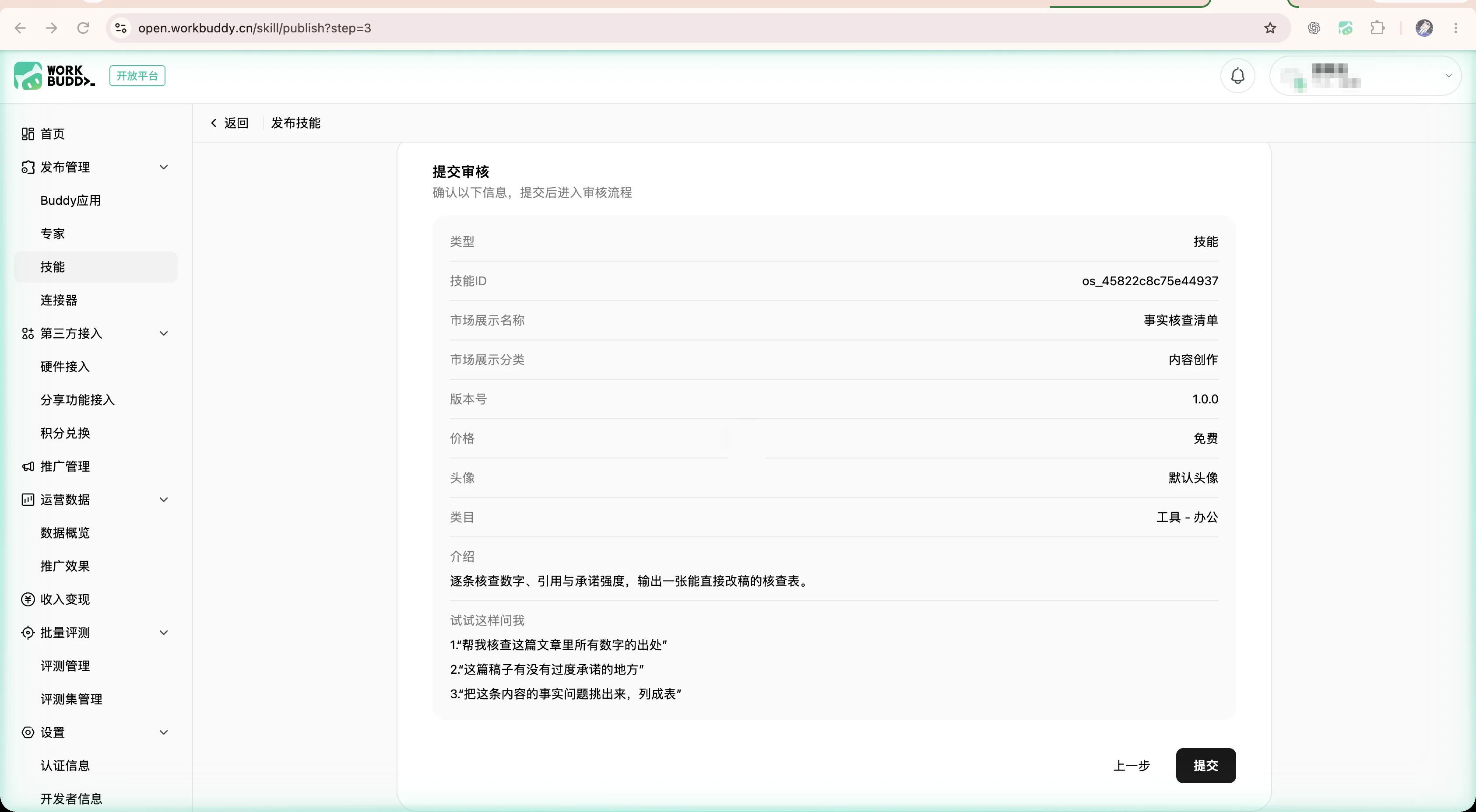
My account therefore followed the path of submitting a free Skill first and enabling payments after approval. Check the publishing page for your own account.
Review does not finish immediately
After submission, the page estimated that a result would arrive within seven working days.
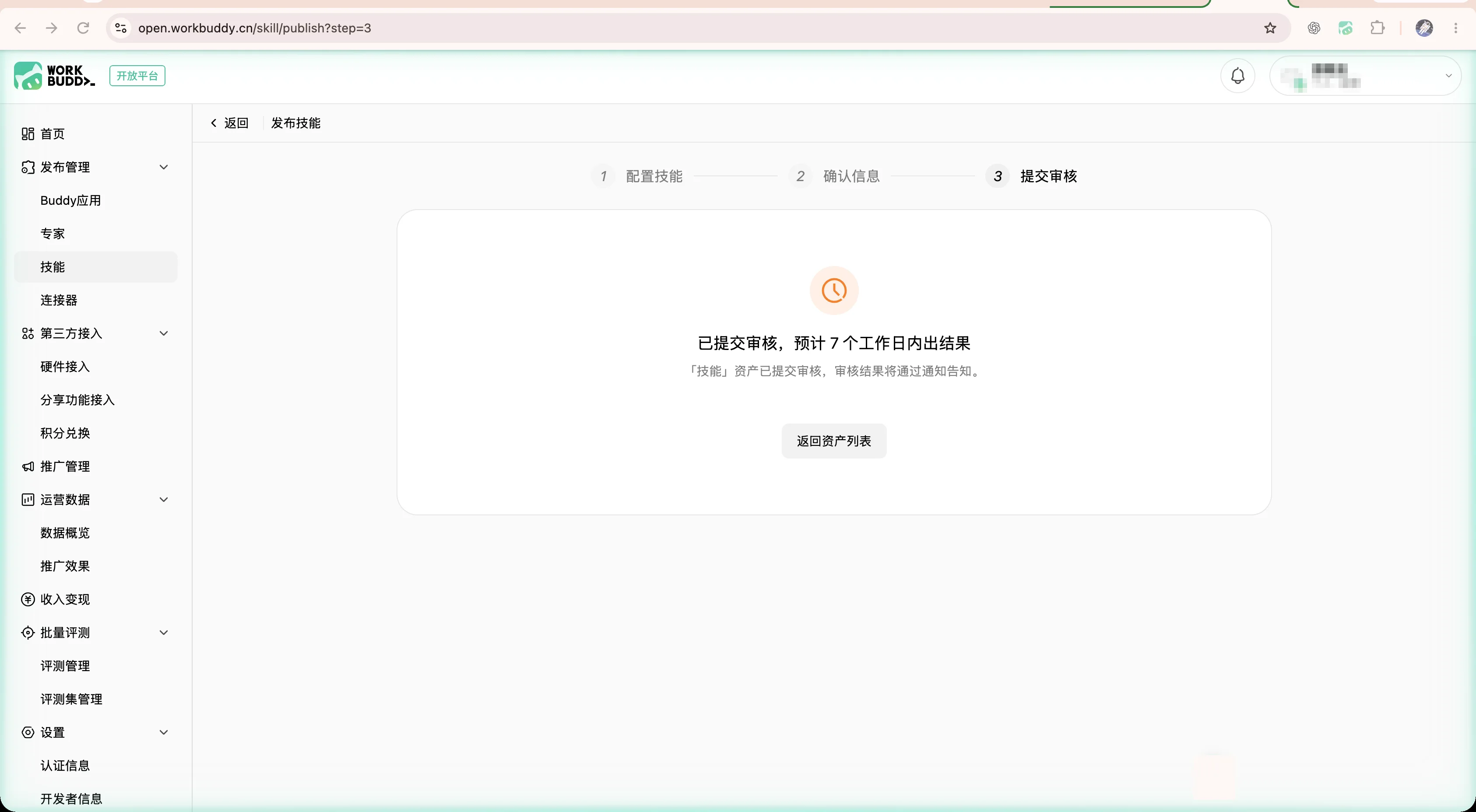
Skill review and payment-material review are separate processes. The current documentation also says that a published free Skill cannot be changed directly into a paid one. If you plan to charge, design the free showcase version and the paid version separately.
2. Decide what you are selling
The two main paid formats are:
- Workflow tool: the buyer submits materials, the Skill processes them through your designed steps, and returns a result.
- Consultant: the buyer brings a question and receives advice based on your decision method.
Before paying, buyers need to understand four things:
| What the buyer wants to know | What you need to explain |
|---|---|
| Who it is for | The people and tasks it fits best |
| What to submit | Required files, tables, text, images, and formats |
| What they receive | A checklist, report, or editable deliverable |
| What it cannot do | Missing inputs and decisions that require a human |
For example, a contract-analysis Skill could say: For: project owners who need to compare two contract versions quickly. Input: the original contract, the revised version, and the clauses of concern. Output: line-by-line differences, possible impact, and questions requiring human confirmation. Limit: it does not make a legal determination; when pages are missing, it lists the gap instead of inventing content.
You are not selling a file. You are selling a result that people can understand and verify.

3. Test three input types before listing
A successful demo does not mean that someone else can use the Skill. Test at least:
Complete input: verify that complete materials produce a usable result. Missing key material: see whether the Skill asks for it instead of making up an answer. Clearly invalid input: check that it stops and explains the problem.
For contract, quotation, or data-reconciliation Skills, add a fourth test for conflicting materials. Does the Skill identify the conflict, or silently choose one version?
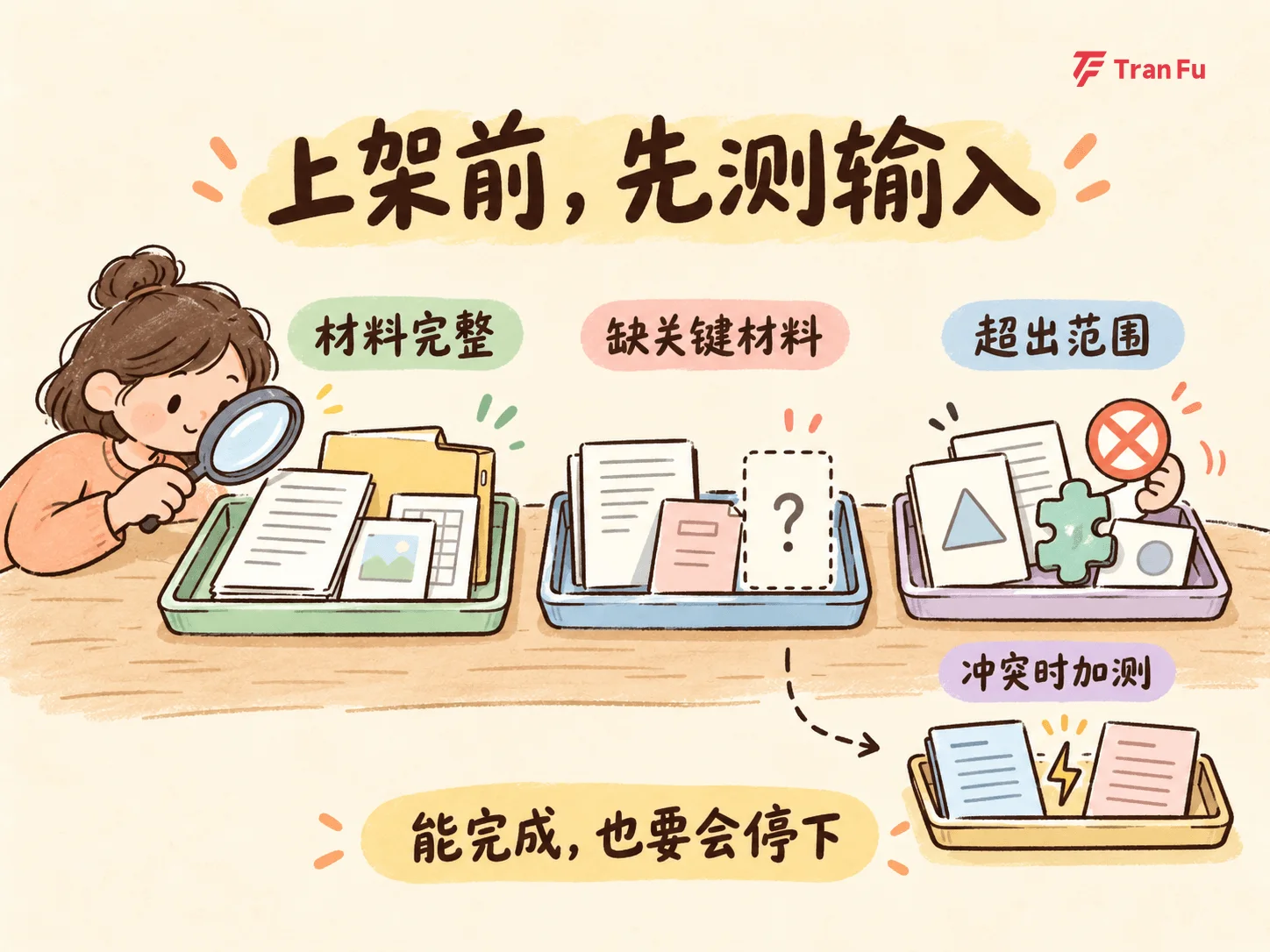
You can use this test prompt:
Test this Skill with:
- Complete materials.
- One key material missing.
- Materials clearly outside its scope.
For each test, record:
- Whether it identifies gaps or conflicts.
- Whether it asks follow-up questions.
- Whether it treats uncertainty as certainty.
- Whether the result can be quickly inspected by a person.
If it cannot complete the task reliably, it must stop and explain why.
This is a self-check, not an official platform standard. A Skill that stops when information is missing is more trustworthy than one that pretends it succeeded.
4. One-time purchase or monthly subscription?
The current open documentation provides two pricing models.
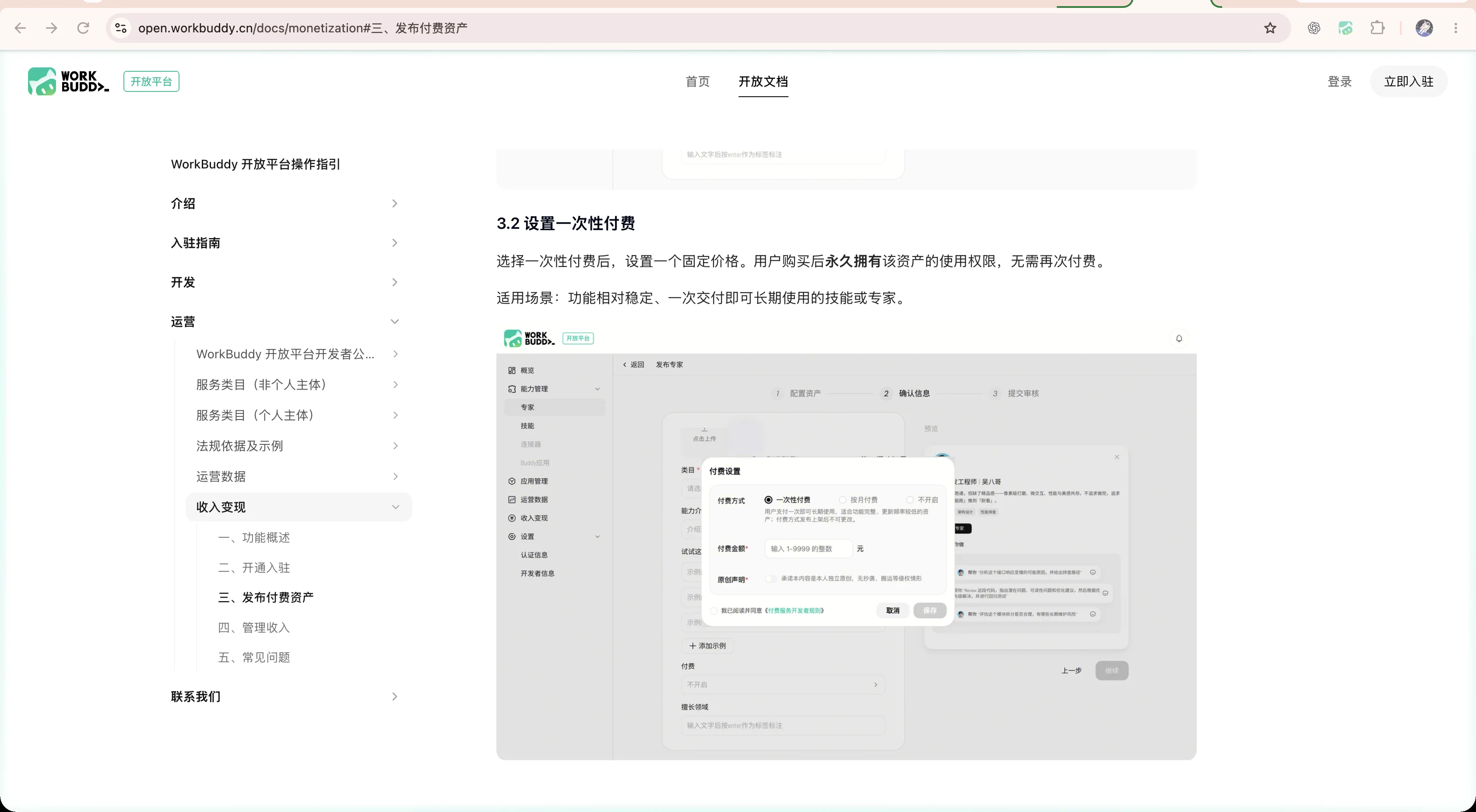
Buy once, use long term
This fits stable workflow tools or Experts that remain useful after a one-time delivery. An official example card shows 79 yuan; that is an example, not a recommended price.
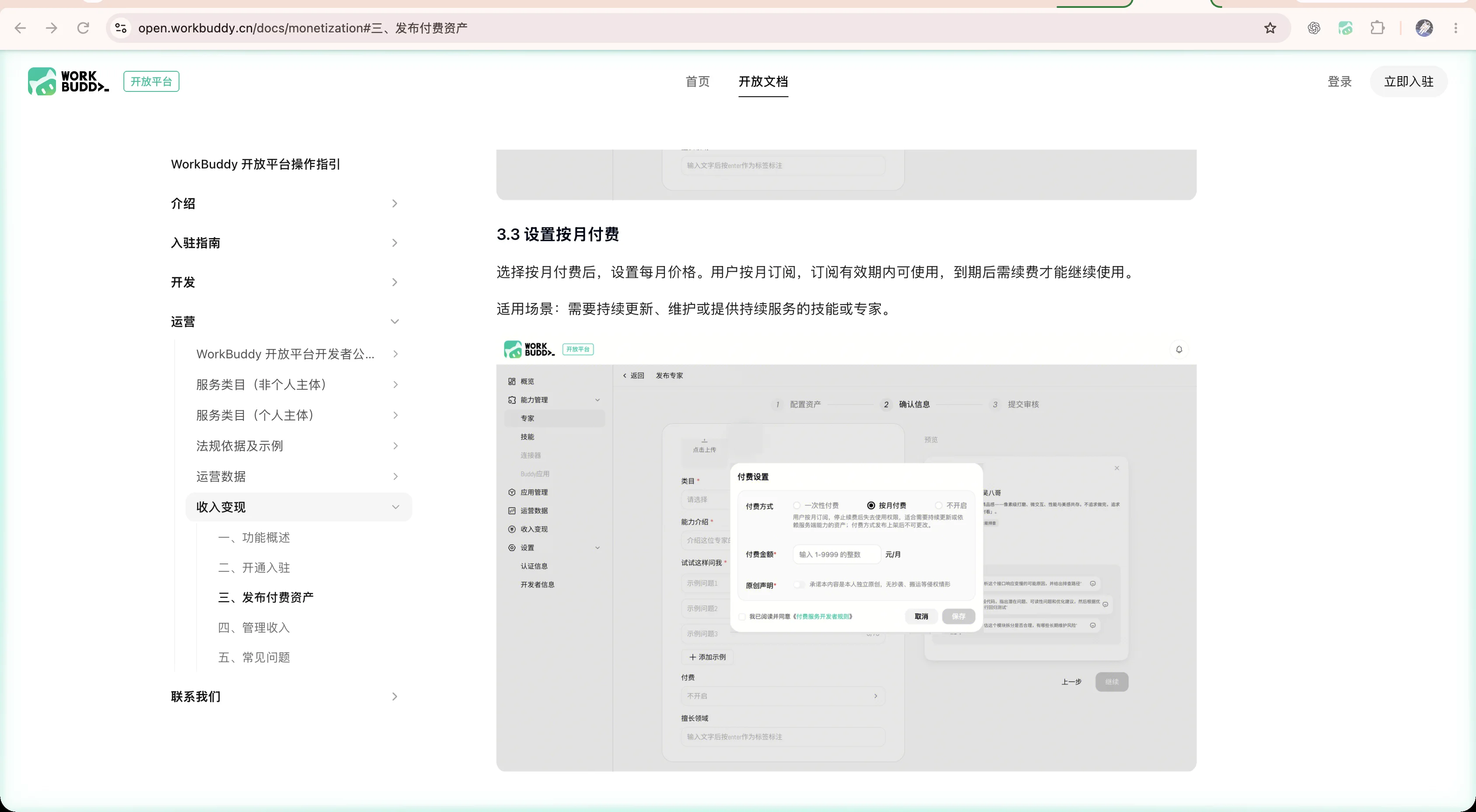
Monthly subscription
This fits products that need ongoing updates, maintenance, or service. Users can access them during the subscription period and must renew after it ends.
A monthly price is not simply a one-time price divided by twelve. Each month, you need to explain what you will update, maintain, or support.
Before choosing a price, include model-call costs, human review, support, platform fees, payment costs, refunds, and applicable taxes. The current page shows a 1% platform service fee during the beta period, but that is not the total cost or necessarily the final amount you receive. Recheck payment, withdrawal, and contract terms before submitting.
5. Verify that people will pay
Do not build ten Skills at once, and do not only ask a group chat whether people would buy. A better validation method is to:
- Show a real but anonymized example from input to execution to result.
- Expose details that demonstrate quality, rather than only showing a “completed” screenshot.
- Let likely users try it while you record where they get stuck and what would make them pay.
The income page shows income structure and billing details.
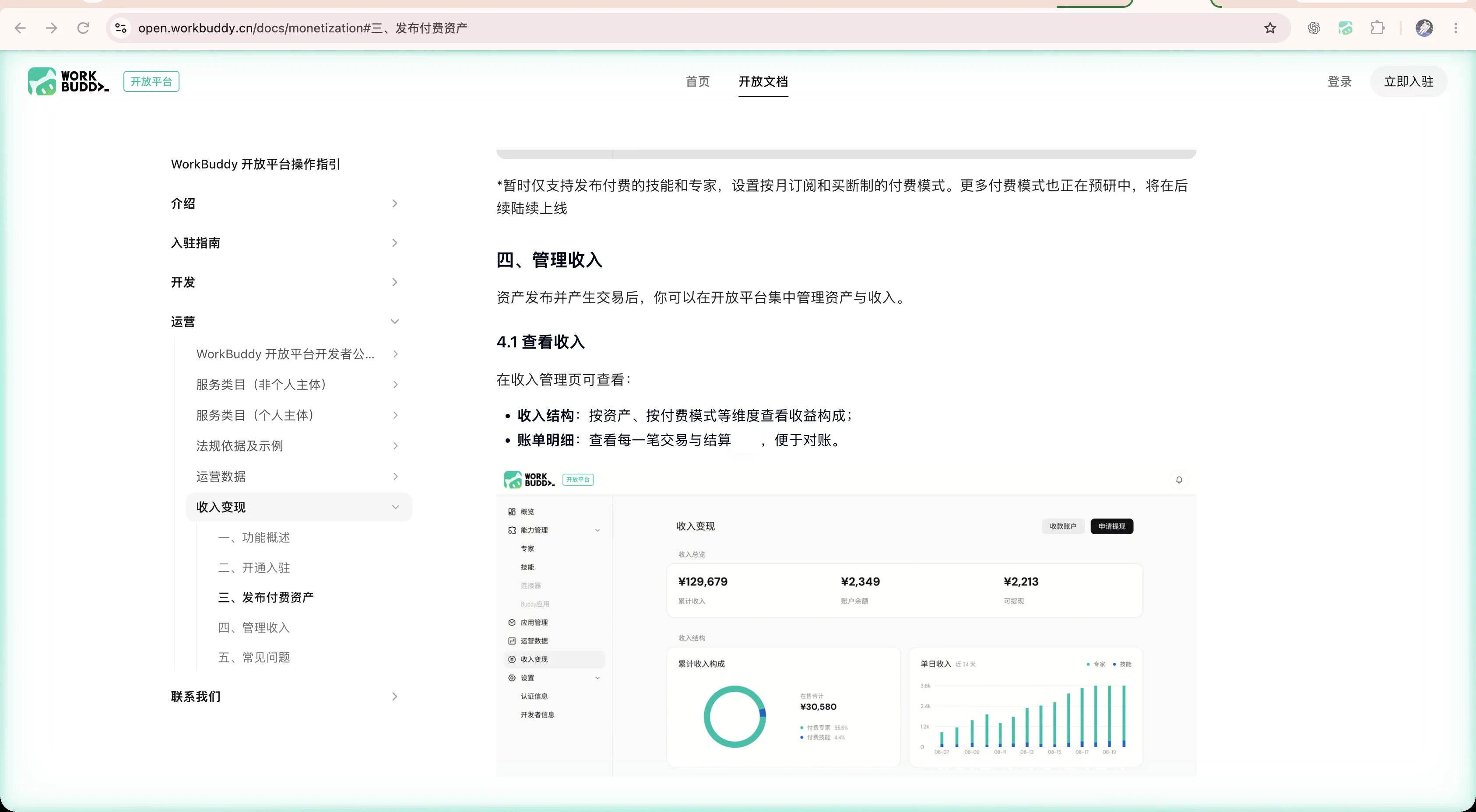
Treat withdrawals, settlement timing, observation periods, and destination accounts according to the current page and contract. “Cumulative income” is not necessarily money you can withdraw today.
The first payment proves that you have started. Continued sales depend on result quality and whether users recommend the Skill.
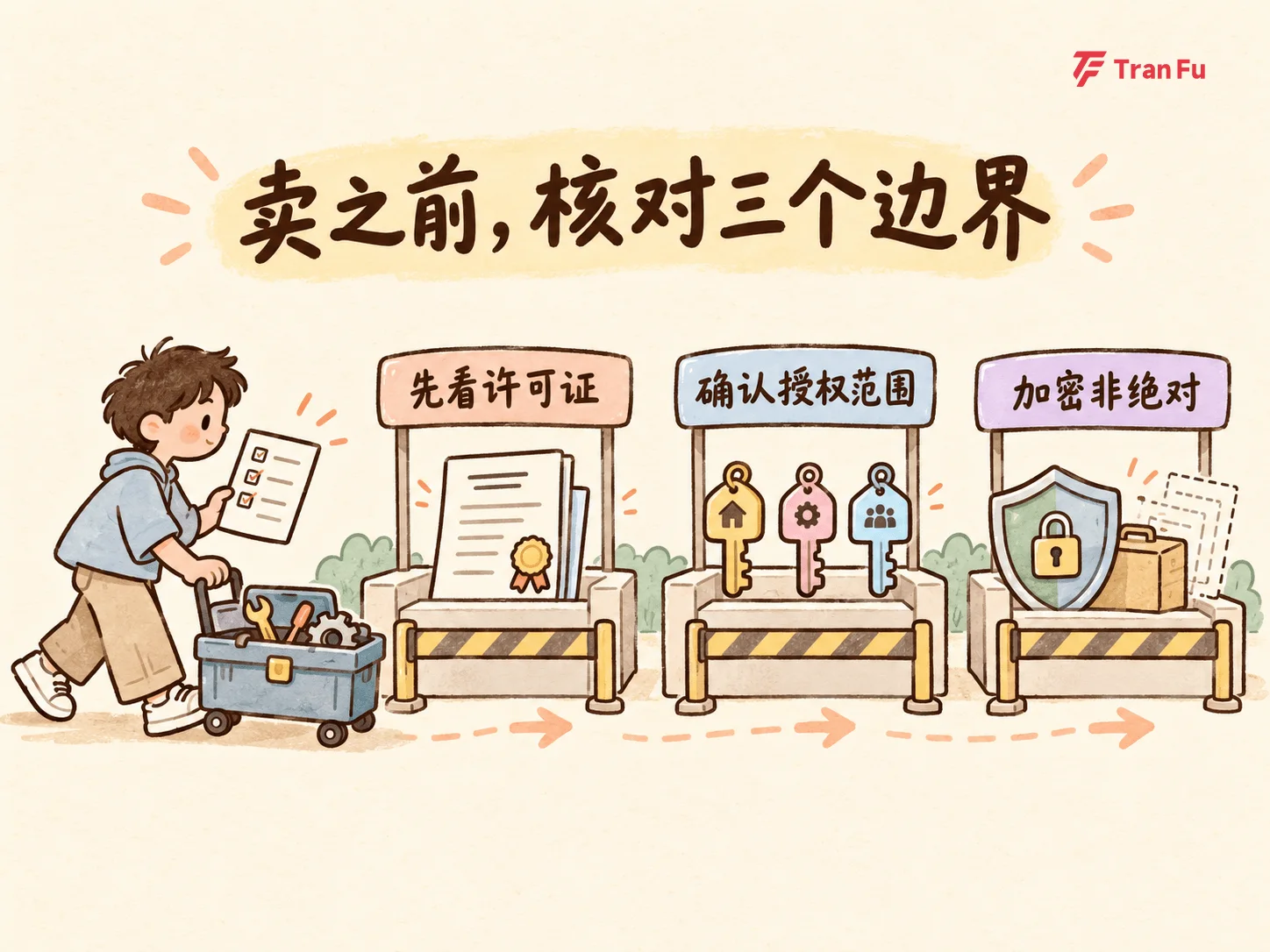
6. Three boundaries to understand
Open source does not mean unrestricted commercial use
If you adapt an open-source Skill from GitHub, read its license first. MIT generally permits commercial use and modification, but requires preserving copyright and license notices. Other projects have their own terms.
A usage right is not source-code or resale permission
Buying another person's Skill usually answers whether you may use it. Before paying, confirm whether you may modify it, charge for it on another platform, or resell it. If you combine several Skills for a client, check each license separately.
Encryption is not absolute copy protection
The platform says paid Skills and Experts run in the cloud with encryption protection. This can reduce the risk of direct source-code extraction, but it does not prevent all copying. What keeps users is result quality, ongoing maintenance, and deep understanding of the work.
Final: start with one small tool
WorkBuddy provides a way to charge, but it does not do the hardest part for you: turning your experience into a result that others can use, inspect, and pay for.
Do not start by building an entire suite. Choose one task you have done repeatedly and understand well, then turn it into a small tool.
First help one person use it successfully and get a good result. Then think about selling it to more people.