
Someone in the group chat shares another new model.
You open the review and feel that it really might change your work. Then you look at your saved links and remember that last week's tutorial is still unopened. You have read plenty of news, yet your weekly reports, meeting notes, and client proposals are still produced in the old way.
What drains people is often not that they cannot learn. It is that they do not know whether this update is worth learning right now.
Start with one sentence: ordinary people do not need to keep up with every release. They only need to judge whether this new capability can improve a real task they repeatedly do.
How do you judge that? Do not guess what model companies will release next. Put your current work into one table first.
The industry debates speed; you decide where your time goes
Over the past few days, the AI industry has shown a representative debate about speed.
On September 12, Anthropic CEO Dario Amodei proposed slowing the pace of frontier-model capability gains to leave more time for safety evaluation and safeguards. He also made one point clear: this did not mean stopping model training or stopping technical progress.
Two days later, Jensen Huang discussed that essay during an All-In Summit interview. He recognized the importance of safety, but leaned toward letting companies decide for themselves whether to pause or slow down.
During the same interview, Donald Trump called in. The call mainly touched on doomsday narratives about AI taking over the world, data centers, and American AI competitiveness. He did not name Amodei or respond to the proposal point by point.
The three sides were not talking about the same kind of speed. One was concerned about frontier capabilities growing too fast. One cared about whether companies can set their own pace. One focused on industry and national competition.
Those debates may shape the industry, but they will not answer your question: is the new capability you saw today worth several evenings of learning?

Fast releases do not mean you must learn fast. Industry debates about slowing down do not mean you should stop using the tools you already have. Your speed should be set by your own work.
Do not score the new feature; ask six questions first
The table below is not a scientific evaluation system, and there is no threshold like "answer four items correctly and you must learn it." It simply brings the questions that are easily hidden by hype onto the same surface.
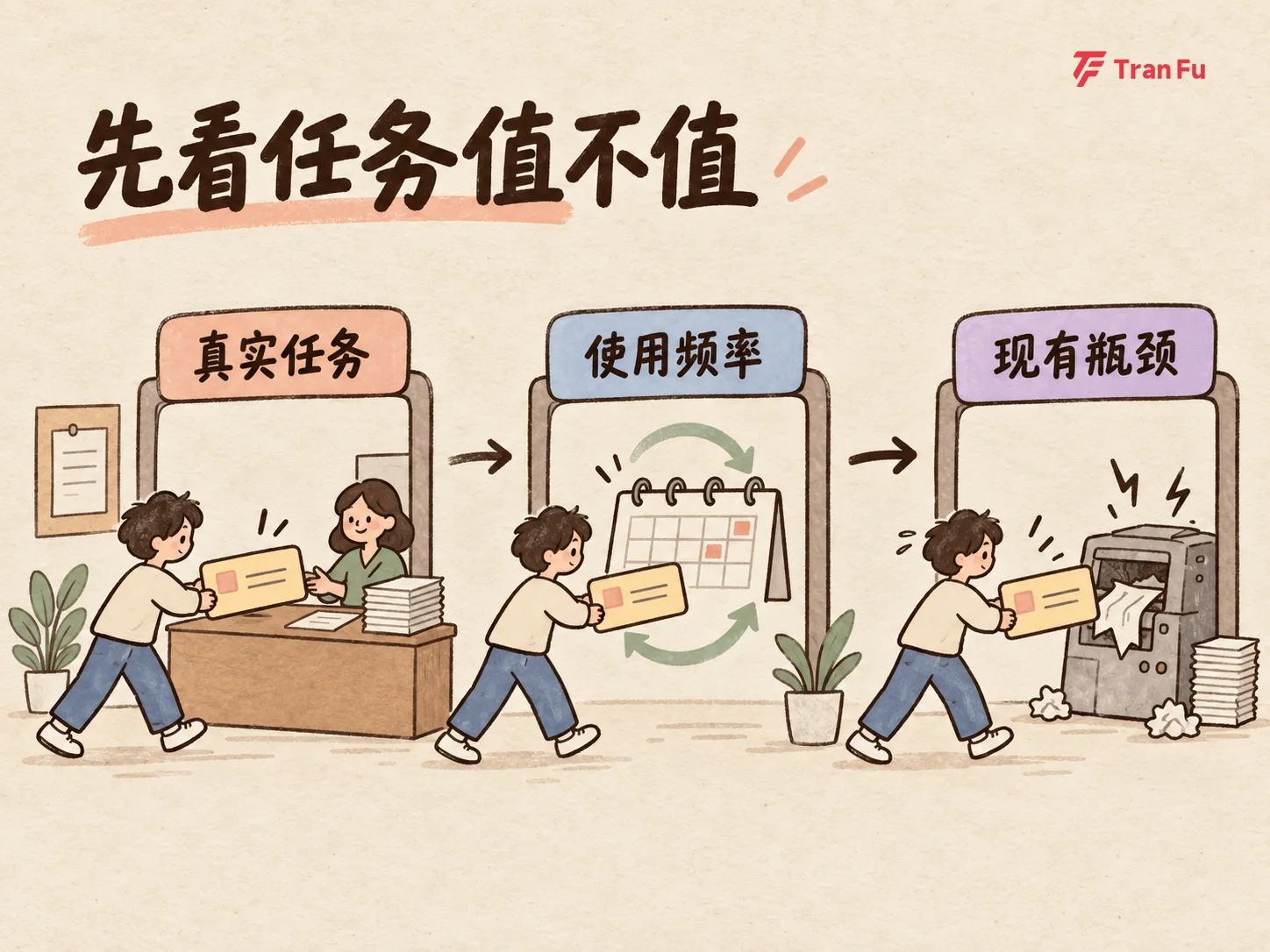
| What to check | Question to ask yourself | Signals that it is worth investing now | Signals that it can wait |
|---|---|---|---|
| Real task | Which task I am already doing can it solve? | You can name a task that is happening now and needs to be delivered | You can only repeat demo use cases and cannot think of your own task |
| Frequency | Will this task repeat? | It appears weekly or monthly, so learning it can be reused | You only need it occasionally, or have not needed it yet |
| Current bottleneck | Where exactly does the old method get stuck? | Quality, speed, or feasibility is already clearly limited | The old method works well enough; the new feature just looks cooler |
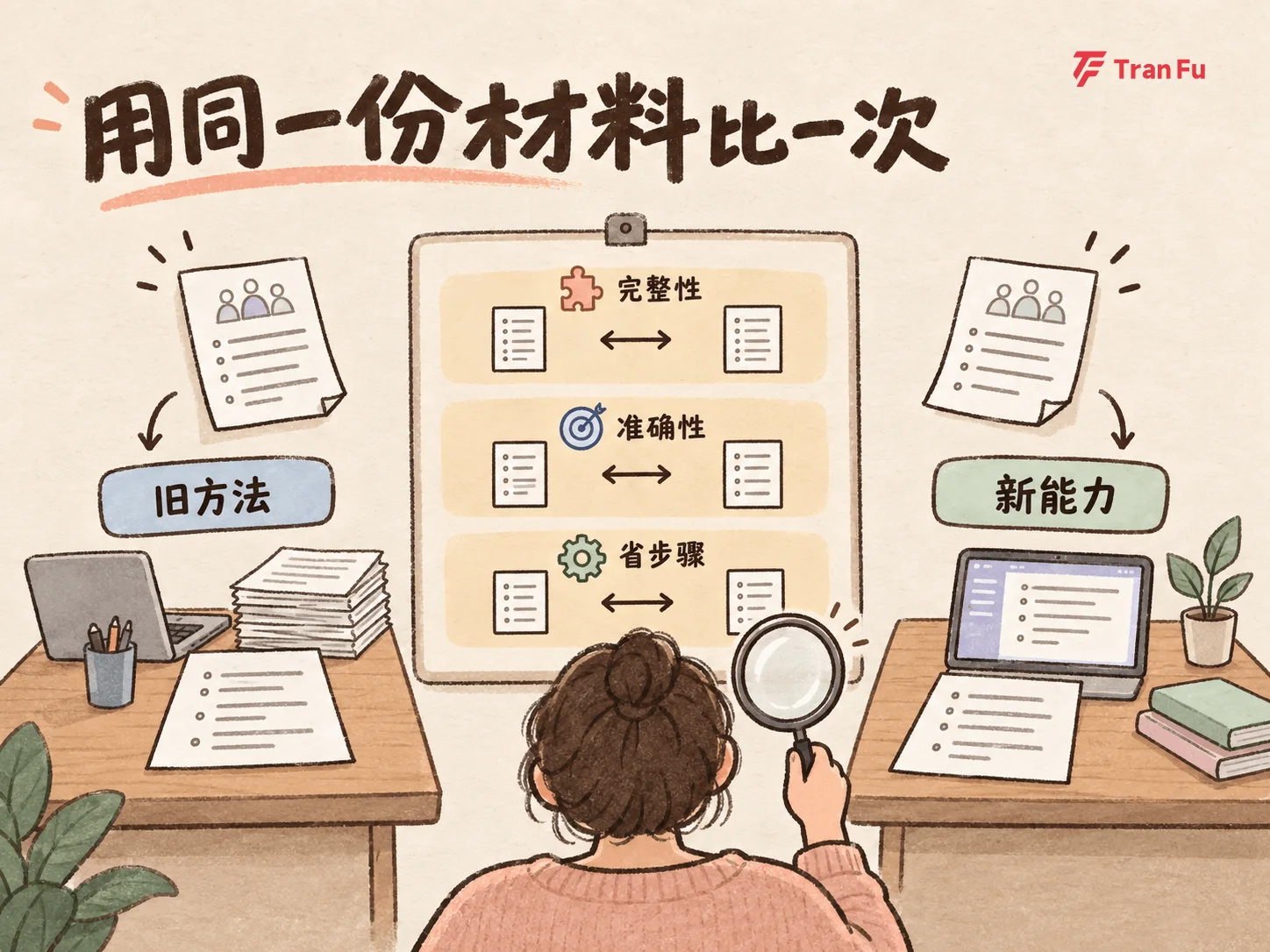
| Verifiable improvement | Can I compare old and new results on the same material? | You can compare whether the result is more complete, more accurate, or requires fewer steps | You can only watch launches, reviews, or edited demos |
| Learning and migration cost | How much of my current habit must change to use it? | The trial cost is acceptable and will not interrupt critical work | It requires changing tools, migrating data, or rebuilding collaboration while the benefit is unclear |
| Transferability | Am I learning a method or a short-lived operation? | You can take away a way to ask, judge, or process tasks | You mainly remember a product's button locations and temporary tricks |
You do not need to calculate a score for every item. "Four points means worth learning, three points means not worth it" sounds decisive, but real tasks are not that neat. You only need to see which action the six answers generally push you toward.

After filling in the table, there are only three actions
Invest in learning now.
You already have a real task, and it repeats. The bottleneck of the old method is clear, and the new capability can be tested with existing material. Learning now has a clear place to land. It is not about keeping up with the news.
Try it once with a real sample.
You can see potential value, but you do not yet know whether the result is stable or whether switching is worth the cost. Do not watch a full tutorial yet, and do not rush to migrate all work. Run the same material once and compare the old and new outputs.
Ignore it for now.
You do not have a matching task, and the old method is not stuck. Not learning it now does not mean rejecting it forever. When a real need appears, come back and judge again. The information may be clearer by then, and the tutorials may be more mature.
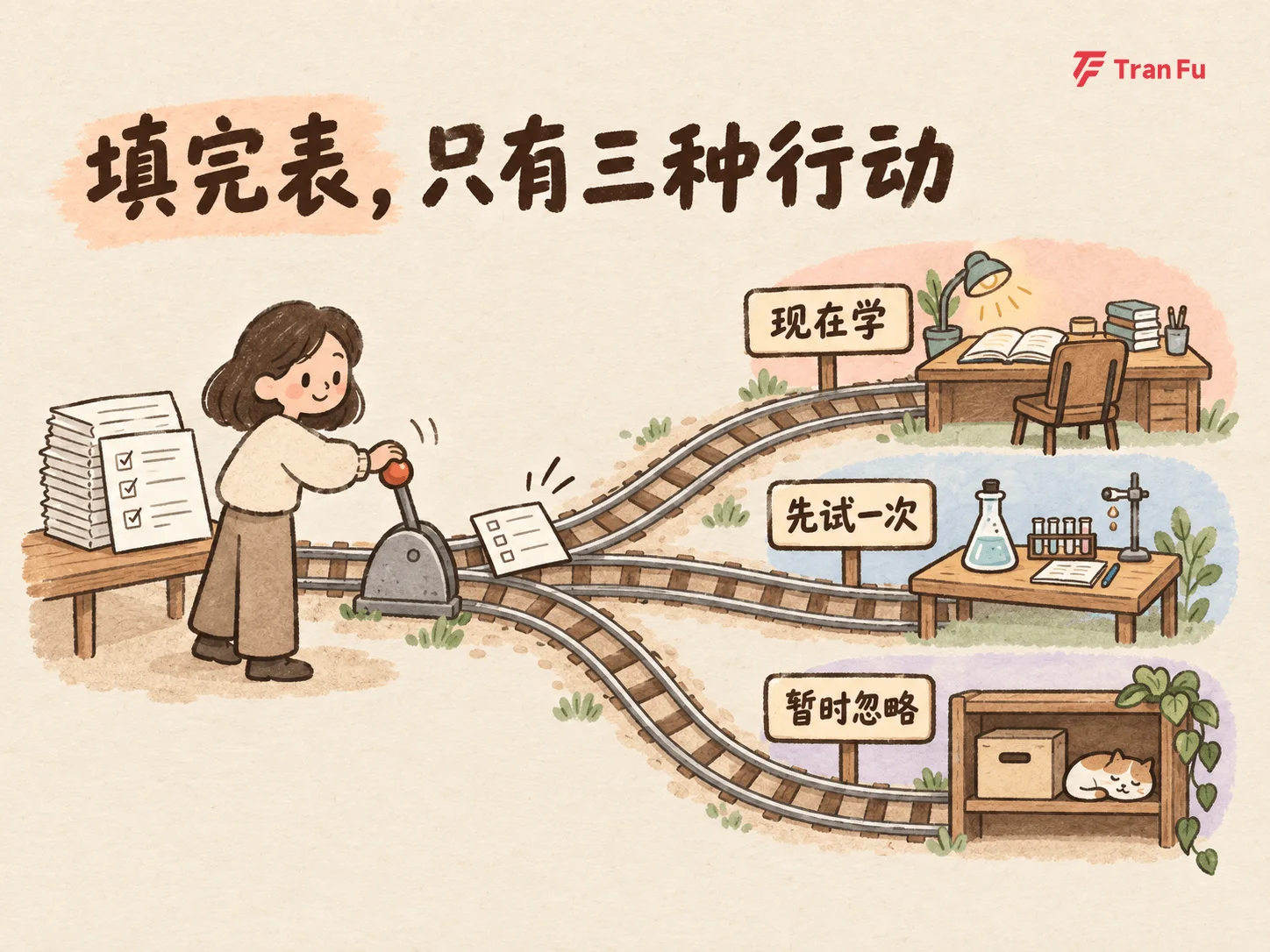
These three outcomes are not permanent labels. When the task changes, you can fill in the answers again.
See whether the new capability can enter your workplace
Suppose a team needs to turn multiple meeting records into action items every week. The old method often misses owners and deadlines, and the team still has to replay the recording repeatedly. If a new capability can extract tasks, owners, and times from the original record, it is worth testing once with a real sample.
There is a real task, the frequency is high, and the bottleneck of the old method is clear. The team can also compare old and new outputs on the same meeting record: is the information more complete, and does review take less effort? If the improvement is stable and the checking cost is acceptable, then it makes sense to invest in learning.
Now change the scenario. A tool releases an eye-catching real-time 3D presentation capability. But your daily work is mainly writing proposals, conducting interviews, and organizing materials. You never need 3D output, and your existing tools are not blocked by this limitation.
It may be genuinely powerful. It is simply unrelated to you for now. Putting the tutorial down protects your current task; it does not reject new technology.
Some decisions cannot rely on this table alone
This table works for personal learning and lightweight trials. In the following situations, it can help you see the questions, but it cannot make the final decision for you:
- the company needs to purchase a unified tool, migrate data, or change collaboration across multiple people;
- the new tool will touch customer information, internal documents, or other sensitive data;
- the result will be used in medical, legal, financial, security, or other high-consequence contexts;
- the team already has unified tools and processes, and personal experimentation would affect other people's work;
- the new capability cannot be verified with real samples, while failure would be hard to absorb.
These decisions still need responsible owners, budget, compliance review, or professional judgment.

Today, run one real test
Open one recently saved AI feature, but do not start with the full tutorial.
Take one piece of work material that you genuinely need to deliver and walk through the six questions. If the answers are still unclear, run a small comparison with that same material.
After that, decide: learn it now, try it once, or stop chasing it for the moment.